
The River and the Border
Out Stealing HorsesThe river is at once a route, a boundary, a witness to violence, and an anchor in Trond’s changing sense of identity.
increasing Bearing strength in each event
 decreasing
Bearing strength in each eventdecreasingA Border in the Water
A Border in the Water
Water Between Countries
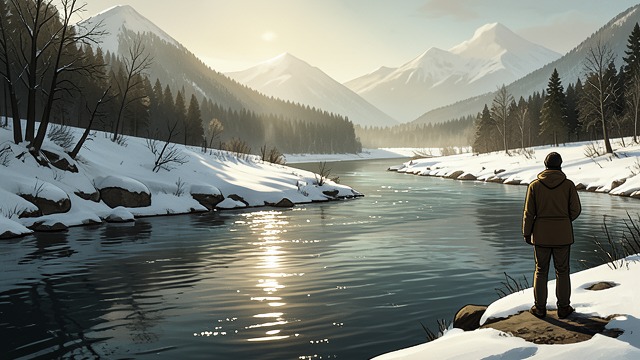
Trond looks at the river and wonders whether its water feels Swedish while it crosses Norway. The boundary seems both real and strangely difficult to locate.
A Familiar Current
He rows across the same water with his father and Jon. The river is part of daily life, yet its passage across the border gives it a wider meaning.
For Trond, water makes geography intimate rather than abstract. It connects places even as it divides them.
The River as Escape Route
The River as Escape Route
Hidden Movement
The river helps people and messages travel toward Sweden while the village appears ordinary. Boats and familiar paths make the landscape useful to the resistance route.
Danger at the Bank
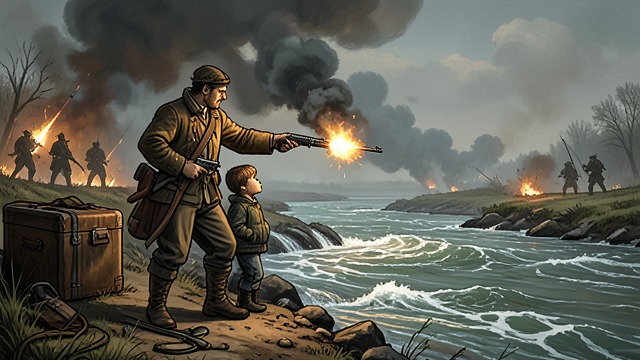
In 1944, the fugitive and Jon’s mother reach the river under German fire. Water is a possible crossing but also an exposed space where the soldiers can target them.
The river offers passage without guaranteeing safety. Its meaning depends on who must cross it and what pursuit waits on either bank.
Timber Across the Border
Timber Across the Border
A Laboring River
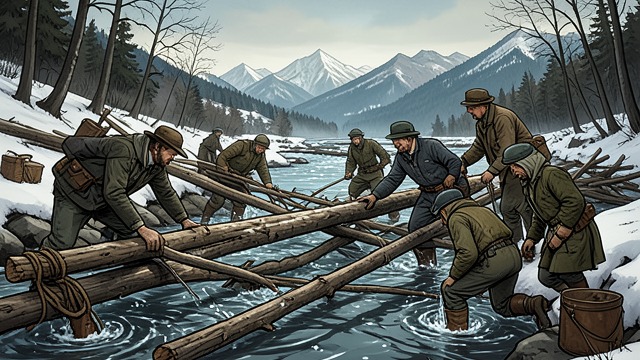
Trond’s father sends timber downstream toward Sweden. Trond and the men work to free jammed logs as the current and water level threaten the plan.
A Poor Return
Most of the timber fails to reach the sawmill, and the money later collected in Karlstad is modest. The river has carried away much of the work the family hoped to turn into security.
The current resists being controlled by human effort. Trond learns that competence and determination cannot make a landscape obey.
The River as Anchor

The River as Anchor
Alone in the Current
Trond stands in the river after discovering that his father is gone. The moving water makes him feel singled out rather than abandoned.
A Changing Self
He experiences himself as the anchor of the world, even as he knows that his life has shifted. The river offers a steady physical presence when his family life no longer feels stable.
The sensation is temporary, but it becomes part of his memory of the place. Water gives him a way to experience change without being entirely swept away by it.
Swan Lake in Winter
Swan Lake in Winter
A Private Name
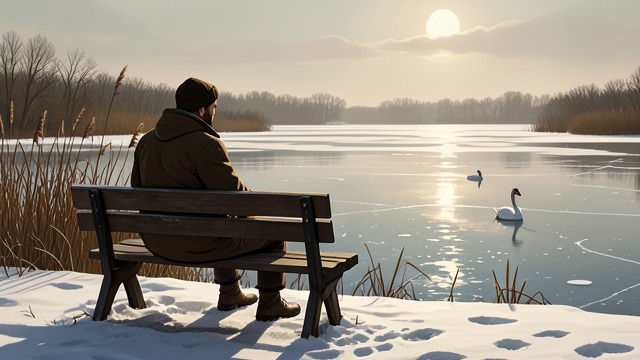
Trond calls the lake Swan Lake and visits a bench near the reeds with Lyra. The familiar shore gives his solitary routine a quiet point of return.
Ice Approaches
As the weather cools, Trond wonders whether the swans will remain when the lake freezes. His attention to their ordinary survival briefly interrupts his inward preoccupation.
The waterside remains a place of observation rather than possession. Trond can sit beside it and accept a consolation he does not entirely need or trust.
The first days at the cabin in 1948
During the occupation
Summer 1948
A summer night after Trond’s father disappears
Early November 1999
